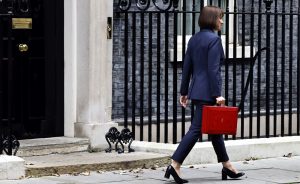
Chancellor Rachel Reeves
Chancellor Rachel Reeves took centre stage on November 26 when she stood in front of the House of Commons to give her economic instructions for the next year. With so much of it impacting businesses, assistant editor Benjamin Austin delved deeper into the report.
The dust has settled after what ended up being a farce of a Budget announcement.
Chancellor Rachel Reeves received plaudits for the way she conducted herself despite a monumental error occurring on the side of the Office for Budget Responsibility (OBR), which leaked the contents of her decisions almost an hour before she had even addressed Parliament.
The mistake had an impact on the markets, but her composure did bring back stability, however it will not take away from the impact the changes will make to the economy.
Despite receiving praise Rachel has been accused of pushing policies that seem to solely pander to Labour backbenchers.
The scrapping of the two-child cap despite previously suggesting otherwise, and the proposal of a ‘mansion tax’ for properties above £2m are claimed as ways for the chancellor to play politics with her party. Raising the National Living Wage for all ages while freezing the income tax threshold until 2031 could also be perceived as a political work-around to raise taxes without explicitly saying such.
But ultimately the announcement has seemingly met little backlash with the public and though it is not suggesting quick and major boost, the OBR has upgraded the country’s growth projections from 1% to 1.5%; a 50% increase.
Yet businesses still seem to be in the firing line following yet more financial burdens being placed on their books.
National Living Wage
The raising of the National Living Wage in 2024 put a massive burden on all businesses, especially small and medium enterprises (SMEs) as it was a greater expenditure denting profit margins.
Now Ms Reeves once again looked to deepen her pockets using with the same method as before raising the minimum wage for all ages for a second time.
From April, workers under 21 years old will have their paychecks boosted to £10/hr while those over will now earn £12.71/hr.
Especially for younger workers that is a huge boost in wages which will have a serious impact on those who employ them.
Rain Newton-Smith, chief executive of the CBI, said: “Adding national insurance to salary sacrifice pension contributions curtails savings and pushes up the cost of employment.
“Coming on top of the rise to the National Living Wage, increased employment costs make it even more expensive for employers to offer jobs to young people and jobseekers.”
Pair this increase with the lowering of the National Insurance Contribution (NIC) threshold in the 2024 Budget, this not only means more money leaving in wages but even more being siphoned into these payments.
And it doesn’t even necessarily mean greater income for workers as the chancellor also announced she will freeze income tax thresholds until 2031.
Professor Joe Nellis, economic advisor at MHA said: “The continued freeze on income tax and National Insurance thresholds will drag many more earners into paying higher rates of tax.”
It also springs a newer issue in youth employment with it potentially having a negative impact on the number of young people gaining success in the job market.
Youth employment
Professor Nellis continued: “The above-inflation increase in the minimum wage is good for low-paid workers who happen to be in work, but this may disincentivise hiring at a time of high youth unemployment and economic activity.”
Simply put, if a company is to pay through the nose for the wages of a new hire, they perhaps would cast their net to find a more experienced candidate.
Thanks to the previous two Budgets, the NLW has increased by 66% and it is an effect that is being felt in the apprenticeship market which has seen a huge downturn over the last decade.
In 2024, 170,000 fewer positions were being offered than a decade ago with SMEs halting many of their training programmes.
Chris Houston, managing director of Tadweld, explained: “In 2023 the minimum wage for an apprentice £6/hour.
“While that seems low, apprentices attend college one day a week and we pay them for that time too.
“They’re in training for most of the time they are with us, so we’ve always seen apprentices as an investment.
“However, in 2024 the apprentice NLW increased to £7.50/hr and then in 2025 it increased to £10/hr; that’s a staggering 66% increase in two years.
“In 2026 the minimum wage for under 18s will increase again to £10.85 which makes offering apprenticeships exceptionally expensive.”
Now the government has put plans forward to introduce funding to make apprenticeship training free for SMEs hiring those under 25 to help cut costs, however this only scraps the current 5% employer contributions for those in training between 19 and 24 years old with those younger already being fully funded.
Then combine that with the raise in wages it may do little to correct the issue.
As it stands, youth unemployment is at its highest rates since the pandemic (15.3%) and with fewer financial incentives to now develop and train the younger generation, this number isn’t likely to decrease.
Missed opportunities
There has been further criticism as well from industry suggesting Rachel’s plans look to short-term fixes to give the party some breathing space and neglects the long-term picture.
Duncan Ferguson, vice president for commercial and industrial printing at Epson UK is one such critic feeling more incentives could have been offered for businesses striving to towards sustainable technology and supply chains.
He said: “We would have appreciated the introduction of a tax relief or enhanced capital allowances for companies that adopt low-carbon manufacturing and energy-efficient systems.
“By doing so the chancellor could have accelerated the transition to a net-zero economy, strengthen UK industrial competitiveness, and boost investment confidence.
“Supporting manufacturers who invest in digital and sustainable production methods would enable a new generation of local, agile businesses to thrive, cutting waste, reducing transport emissions, and revitalising regional economies.”
It has been a rough few years for the public. From rises in mortgage rates to the Cost-of-Living Crisis, belts are tighter than ever. For this Budget to indicate economy growth while also be projected to lower interest rates, as well as suggestively place more money in peoples’ pockets, it could be the break the country needed; but at what cost?
Well, it seems businesses may be the ones to be taking the brunt of it.
Ms Newton-Smith concluded: “With business investment and profitability now weaker as a result of these decisions, the government must now double-down on leveraging the experience and expertise of enterprise to find the step-change in economic growth that has proven elusive.”
Once again it seems businesses are being asked to cough up the coffers to help stabilise an otherwise volatile economic landscape.