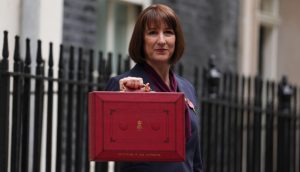
Chancellor Rachel Reeves with the red briefcase
Chancellor Rachel Reeves announced various measures regarding Employers’ National Insurance contributions (NICs), Capital Gains Tax, and Corporation Tax in her first October budget since Labour came into power.
She also officially confirmed changes to the National Minimum Wage and other public spending commitments that were revealed in recent days.
Rain Newton-Smith, chief executive of the Confederation of British Industry (CBI), said: “The Chancellor had difficult choices to make to deliver stability for the economy and public finances. A more balanced approach to our fiscal rules, which prioritises capital investment, should help to unlock private sector investment in our infrastructure and net zero transition over the long term.
“This is a tough Budget for business. While the Corporation Tax Roadmap will help create much-needed stability, the hike in National Insurance Contributions alongside other increases to the employer cost base will increase the burden on business, hit the ability to invest, and ultimately make it more expensive to hire people or give pay rises.”
Rain said only the private sector can provide the scale of investment required to deliver the government’s growth agenda. –
“To achieve this shared mission of growing our economy sustainably, it’s vital that the government doubles down on its partnership with business to unlock the investment that is needed to drive opportunity around the UK,” she added.
New tax burdens introduced in the latest budget could tip even more businesses into financial distress, an insolvency expert from Shakespeare Martineau has warned.
Andy Taylor, partner and head of restructuring at the law firm, said: “Businesses in high-labour and supply chain-intensive sectors, in particular, could struggle to absorb these costs.”
The Federation of Small Businesses (FSB) welcomed the record increase in the employment allowance for small businesses, and the protection for small businesses in England from inflationary business rate hikes; following its extensive campaigning.
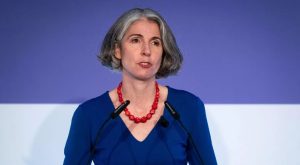
Rain Newton-Smith
The Employment Allowance has more than doubled, from £5,000 to £10,500, which will shield the smallest employers from the employer National Insurance Contributions (NICs) rise.
FSB has warned, however, that small and medium-sized enterprise (SME) employers with more employees will struggle with the hike in employment costs, including through the changes to employer NICs, at the same time as the Government is planning to introduce a raft of new employment laws.
Tina McKenzie, FSB’s policy chair, said: “Against a tough backdrop, the Budget shows a clear direction in business policy now, for the whole of this Parliament to target support at small businesses, rather than big corporates.”
The changes to Employers’ National Insurance represent a straightforward increase in business costs and take no account of whether a business is profitable or not.
Dr Roger Barker, director of policy at the Institute of Directors, said: “At a time when business confidence is low, hiring plans have already been hit by the Government’s employment rights reforms, and the minimum wage is set to rise by more than inflation, this will hit employment prospects and earnings.
“The effects of higher National Insurance costs will hit profits in the near term before being passed on in lower wages and lower employment.
“Although the increase in the employment allowance will alleviate the hit for the smallest enterprises, there is no doubt that this increase in employers’ National Insurance is a major blow for most businesses.”
One of the key announcements relevant to businesses in the Budget was on NICs. The current rate at which employers pay NICs on workers’ earnings will rise from 13.8% to 15%, while the threshold at which payments start will fall to £5,000 from £9,100.
Manufacturers and businesses more widely have argued this could make it more difficult to hire new staff and create jobs, while our initial calculations suggest this could be costly to the manufacturing sector.
Stephen Phipson CBE, Make UK’s chief executive, said: “This Budget was always going to involve tough choices for business as the Chancellor grapples with the state of the nation’s finances whilst, at the same time, improving the foundations of the economy.”

Stephen Phipson CBE
Joe Nellis, MHA’s economic advisor, said the Budget will shock many in the private sector, given the scale of the increase in employers’ national insurance contributions and the reduction in the threshold at which employers pay them.
“This is effectively a tax on jobs, with SMEs – who account for a large proportion of total employment – taking the biggest hit,” Joe said.
The National Living Wage, paid to those over 21 years of age, will rise to £12.21 an hour from April 2025, an increase of 6.7%.
The National Minimum Wage will also rise in the spring, from £8.60 an hour to £10 for those aged 18,19 and 20.
The separate apprentice rate, which applies to eligible people under 19 – or those over 19 in the first year of an apprenticeship – will also rise, from £6.40 to £7.55, an 18% increase.
The Government recently launched a green paper on its modern industrial strategy, setting out eight key growth-driving sectors. The Budget confirmed that existing funds, previously pledged towards the previous government’s Advanced Manufacturing Plan, will be put towards the industrial strategy.
Stephen said that, looking at the bigger picture, and the medium to long-term, Make UK welcomes the Government’s clear path to growth for manufacturing with a number of positive measures.
“In particular, the commitment to an Industrial Strategy, the Corporate Tax Road Map, and, continued support for vital programmes such as Made Smarter, are key elements of a growth plan, which will enable UK manufacturing to make significant progress over the coming years,” he added.
Chris Barlow, head of manufacturing at MHA, said there were winners and losers in the manufacturing sector from the Budget.
He said: “There were also some real missed opportunities. There were no changes announced to corporation tax which is still relatively high compared to our Irish neighbours.
“There were also no announcements on dealing with Europe post-Brexit which remains a significant challenge for manufacturers particularly when it comes to challenges with supply chains.”