 Halloween is no longer just about pumpkins, costumes and trick-or-treating. From personalised decorations and customised clothing to promotional merchandise and eye-catching signage, the spooky season presents a frighteningly good opportunity for print providers to explore new applications and revenue streams. Chris Davies, head of product marketing C&I, Epson Europe, tells you how.
While branching into unfamiliar applications might seem daunting, advances in digital printing technology are making it easier to experiment with different products without creating operational nightmares. Often, it’s simply about recognising how existing equipment and expertise can be used in new ways.
Conjuring up new opportunities
Customers are increasingly looking beyond traditional printed materials towards products that are personalised and suited to specific occasions. Halloween is a prime example of how this demand can translate into commercial opportunities.
Garment decorators can produce customised T shirts, hoodies and tote bags for events and hospitality teams. Retailers may want branded merchandise, while schools and visitor attractions could require themed accessories, giveaways or decorative displays.
For print providers, diversification needn’t mean changing their business model. A company producing branded clothing could introduce limited-edition Halloween designs, while a sign maker might extend its services into seasonal retail displays, making greater use of existing equipment and workflows.
Taking the fright out of personalisation
Personalised merchandise is one area where digital printing is opening up new possibilities, particularly for short-run production.
UV flatbed printing enables businesses to print directly onto rigid materials, including acrylic, wood and metal, turning everyday objects into customised products such as Halloween decorations, plaques and promotional gifts.
White ink and varnish add another creative dimension, allowing printers to produce layered effects, textures and distinctive finishes. UV printers, such as Epson’s SureColor V4000, are also making direct-to-object printing more accessible to businesses exploring personalised products.
Digital production allows designs to be changed between jobs without extensive setup, making it particularly useful for seasonal orders involving smaller quantities and multiple designs.
Dressing up new revenue streams
Halloween wouldn’t be Halloween without costumes, but the opportunity for garment decorators extends beyond traditional fancy dress. From themed T shirts for hospitality staff to customised sweatshirts and tote bags, apparel offers plenty of scope for seasonal creativity.
Direct-to-film (DTF) printing provides flexibility by printing designs onto specialist film before transferring them onto fabric using heat and pressure. Compatible with a variety of garment types and materials, it’s particularly useful for short runs, varied designs and last-minute event orders.
Dye sublimation offers another option, particularly for polyester textiles and suitably coated products. Heat transfers dye into the material or coating, producing vibrant, durable results without a raised print layer.
This makes it well suited to customised mugs, polyester accessories, soft furnishings and fabric decorations. A single Halloween design could be used across matching drinkware, cushions and other themed merchandise, allowing businesses to create coordinated product ranges.
Understanding the strengths of each technique helps print providers select the most appropriate process for the material and desired finish.
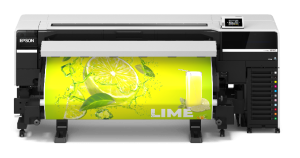
SureColor S9100
Signage that stops customers in their tracks
Halloween also creates demand for signage and display graphics, as retailers, hospitality venues and visitor attractions look to transform spaces and promote events through window graphics, banners, point-of-sale displays and large-format backdrops. For print providers, the challenge is delivering vibrant, high-impact results within tight seasonal deadlines.
Eco-solvent printing is an established option for producing durable graphics on materials including self-adhesive vinyl, banners and display films. Modern ink formulations and expanded colour sets support strong colour reproduction, while improved drying and production workflows can help accelerate turnaround. For example, Epson’s SureColor S9100 uses an 11-colour ink system to deliver a wide colour gamut for professional signage and graphics applications.
Resin and UV printing provide further options depending on the substrate and intended use. Material selection is equally important, with temporary indoor displays requiring different properties from outdoor signage exposed to the elements.
More treats, fewer production nightmares
Diversification needs to be commercially practical. Seasonal orders often involve smaller quantities, changing artwork and tight deadlines, making efficient workflows essential.
While digital printing enables short runs without extensive setup, businesses must still consider material compatibility, finishing requirements, colour consistency and production costs.
Moving into personalised merchandise, for example, may require different heat presses or substrates, while decorative signage could introduce additional cutting or installation processes.
Starting with applications that complement existing expertise can help manage these challenges. Testing a limited product range allows businesses to assess demand, production costs and potential margins before expanding further.
Making the magic last beyond Halloween
Halloween may provide the creative inspiration, but the wider opportunity lies in developing capabilities that remain valuable throughout the year. The same techniques can support Christmas gifting, Valentine’s Day promotions, sporting events and corporate merchandise.
At Epson, we are seeing growing interest in technologies such as UV, DTF and dye sublimation printing, which allow businesses to explore new applications while building on existing expertise.
Rather than diversifying for the sake of it, print providers should focus on opportunities that complement their capabilities and meet changing customer needs.
Expanding into new markets doesn’t have to involve a frightening leap into the unknown. Sometimes, it simply means looking at familiar technologies in a different light. And for those willing to get creative, that could be the real treat.