As we enter Spring, the Chancellor of the Exchequer has announced new financial guidelines that will govern her party’s spending for the next few years. Despite no further restrictions on businesses, the impact of the decisions made in the Autumn Budget is starting to show its mark. And now with the minimum wage and National Insurance Contribution rises in effect, assistant editor Benjamin Austin took the opportunity to discuss their impact on the confidence within business.

Chancellor Rachel Reeves addressing parliament
Turn the clock back to October, and the newly elected Chancellor of the Exchequer has just outlined her party’s goals for the future of the British economy.
There were concerns for businesses as plans to increase both the National Minimum Wage and National Insurance Contributions (NIC) were scheduled to be implemented by April 6.
Now that day has been and gone, and following a much-anticipated Spring Statement, there isn’t much to ease the pressure Rachel Reeves’ budget brought.
She said: “I am proud of what we have delivered in just nine months.
“Restoring stability to our public finances, giving the Bank of England the foundation to cut interest rates three times since the General Election. And increasing the National Living Wage to give 3 million people a pay rise.
“Now our task is to secure Britain’s future in a world that is changing before our eyes.
“A changing world demands a government that is on the side of working people. Acting in their interest.
“And we are beginning to see change happen. Our plan for change is working. Defence spending is rising. Waiting lists are falling. Wages are up. Interest rates are cut.
“The OBR confirm that our plan to get Britain building will drive growth in our economy and put more money in people’s pockets.”
The hit to businesses
To recap, it was announced on October 30, 2024, that Employer National Insurance rates will increase from 13.8% to 15%, as well as the threshold for businesses to begin paying into it for employees will be reduced from £9,100 to £5,000.
The minimum wage has now also increased from £11.44 to £12.21, with those on the national limit receiving a pay rise worth £1,400 a year. Anyone in full-time employment who is on minimum wage could receive an income boost of £2,500 a year.
This means the Chancellor believes that the workforce will be “on average over £500 a year better off under this government.”
But with benefits supposedly coming to the worker, it would have an impact on business, and that was what was felt from the Autumn Budget, so coming into Spring, company executives waited to see if she would stick to her word and impose no more restrictions.
In the end, she had instead focused on outlining her plans for the public sector and defence spending.
Responding to the Spring Statement, Rain Newton-Smith, CEO of the Confederation of British Industry (CBI), said: “Firms are already braced for a difficult few months ahead with NICs, and National Living Wage increases.
“Weaker growth this year is a serious setback, but not a surprise given the burden businesses are shouldering after the Budget.
“In its current form, the Employment Rights Bill risks imposing a significant regulatory burden on companies with damaging consequences for growth, jobs and investment.”
It was looking so good
Before the Budget, indicators were showing the print industry was close to a mini renaissance following the impact of Covid, with confidence and output set to be on the rise in the new year, according to the BPIF.
But in February, the trade association released its latest figures regarding the wide-format world and statistics showed that confidence in the industry has dropped, with output expected to stagnate.
Charles Jarrold, BPIF chief executive, said at the time: “Hopefully the dip in the forecast is only a short-term blip, and it can be turned around.
“Companies are currently looking to adjust and adapt to Government decisions and searching for a way to invest so they can boost their productivity and increase profitability.
“If the Government can help stimulate business investment, then confidence could quickly turn positive once more.”
Yet the Spring Statement did little to imbue this sought-after confidence.
A recent survey conducted by personalised workwear, uniform, and PPE supplier MyWorkwear revealed 72% of businesses are actively concerned about the upcoming wage and NIC increases with 68% explaining the costs will be passed to the consumer.
The survey went on to find that around half of those asked (44%) were worried their business would struggle to survive in he next five years because of escalating costs.
Co-managing director at My Workwear, James Worthington, said: “The feedback we’re hearing from customers is that businesses are struggling, and concern is growing about the future of the UK economy.
“As well as increasing costs from employer National Insurance Contributions and increased minimum wage, the report noted that inflation rates are a huge concern in business owners’ worries, as well as a lack of skilled labour.
“The inflation rates we are experiencing ourselves are causing us to look at new commercial activities and new pricing structures to try and find ways to absorb the price hikes that are in addition to our usual standard annual price increase”.
The Lord giveth…
And it is this mindset that will undermine the intended purpose of these changes. The government is looking to grow the capability of household spending, but if everything goes up, then confidence in that spending will go down and thus stop the circulation of capital.
It is finding a compromise between the public and private sector that will help drive growth, at least that is the opinion of Ms Newton-Smith.
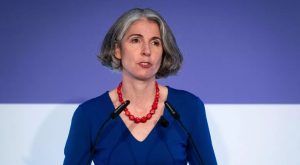
Rain Newton-Smith
She concluded: “A landing zone that commands the confidence of businesses and workers can still be found by taking the time to build a consensus that will give these reforms the footing to have a positive, lasting legacy.
“Protecting public capital spending is the right move to create the foundations for future growth, but the government cannot deliver growth alone.
“Only the private sector can provide investment at the pace and scale we need to boost productivity, create jobs and improve living standards.”
“The government must use the Spending Review to double down on unlocking investment to secure a more positive outlook for long-term growth.
“Setting a world-leading goal for R&D investment, giving employers the flexibility to choose the training and qualifications that make sense for their workforce, and improved public-private partnerships to fund better homes, better schools and better transport would all help deliver growth.”
It is too early to give a definitive answer on what lasting impact these changes will make or have made, and with only one major financial announcement from the Government each year, it may take its time to be altered.
But it seems companies are hoping for the best, preparing for the worst. With what the Chancellor suggests, there is a brighter future to come, but it may follow a rough period as many employers take time to embed into the new status quo.