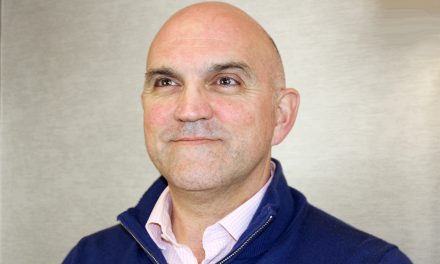
 It has been almost 200 years since the creation of the Printing Charity but now it is taking a big step in its organisation. It has decided to merge all of its support systems together into one cohesive team – all under the guidance of Peter Ashcroft, the newly appointed director of services. Image Reports asked him about his new role.
Q. You’ve recently been appointed to the role of director of services at the Printing Charity. Could you tell our readers what the introduction of this role means for the charity?
This is the first time that all the Printing Charity’s welfare activities have been brought under one umbrella and combined into one team. Current support includes our free, confidential helpline, covering more than 32,000 employees and their families in 370 companies nationwide; the financial assistance we offer those facing hardship; and our Almshouses for people retired from a print career. By looking at these holistically, we can work to make sure that the support we provide is offered in ways that align with the evolving needs of our industry, and fit for the future.
Q. You’ve been in the role for a couple of months now. What have you been up to since you started at the beginning of September?
It’s been a busy few months getting to grips not just with the vast array of support that the charity can offer those in the sector but also getting to know the sector itself. I’ve been out to events with the IPIA, the Print Show, Wrapfest and the UK Graphics Awards, meeting people right across the
sector, hearing about their work and listening to what they have to say about the challenges they’re facing. Attention is now focusing on what more our services can do to meet those challenges.
Q. Are you enjoying your new role? What aspects do you find enjoyable?
I’m really enjoying my new role; it’s incredibly rewarding to be part of an organisation that has such a positive impact on people’s lives. What I find most enjoyable is seeing the immediate difference our support can make, and hearing first-hand from people we have helped, about the difference that help has made. Whether it’s providing financial support when someone’s in crisis;
helping someone access counselling; or simply being there on the other end of the helpline when a caller needs advice or reassurance, these services have a real, tangible effect and it is an honour to be able to play a part in delivering this.
Q. What has 2025 got in store for yourself, the charity’s welfare activities and for the Printing Charity as a whole?
2027 is the Printing Charity’s 200th anniversary, and we’ve already started to think about what such a milestone could mean for our organisation and for the industry overall – this is going to pick up pace in 2025, for sure. We want to make sure we’re learning from the past and looking to the future to understand how we can continue to meet the need now, and in the future. This means listening to what people in our sector have to tell us about the personal and work-related challenges and opportunities they face, so we are looking at ways to do that. The priorities and concerns of someone at the start of their career will be different to those of people who are in the midst of it, and the priorities and concerns of those approaching retirement will be different still, so it’s not going to be a ‘one size fits all’ approach, although our fundamental commitment to help people in our sector when they need us underpins everything we do.
We know that at any time, anyone could face hardship, so we are determined to be there for people when they do. This means being present in places where people in our industry are present, and so along with the team, I’ll be looking at new routes to reach more people and meet the need that’s out there, using the great relationships the team are building to encourage people to start a conversation with us, and with others in their network, about the ways we can help, continuing to make more people aware of what we have to offer.
Q. In your opinion, what is the state of the print industry currently and is there a demand for the charity’s services?
The most recent numbers from the ONS show that there are quarter of a million people currently working in the sectors the charity supports, within some 20,000 businesses. It was encouraging to
see the positive news in the BPIF’s recent Q4 2024 Printing Outlook, with the pace of growth of output and orders picking up in Q3, and a similar pace of growth expected into Q4.
This is a good foundation for the industry, but if I’ve learnt anything from the previous few years, it’s to expect the unexpected, and we also know that despite these green shoots of growth, many businesses and print employees are struggling, and the wider economic environment continues to be challenging.
Against this backdrop, this year we saw the balance tip, and we are now providing financial assistance to more people of working age than of pension age. Mind’s Big Mental Health Report found that 60% of people in the UK said the cost of living was hurting their wellbeing; and in the
same report, found that public knowledge of some aspects of mental health have fallen back to 2009 levels.
This evidences something of a perfect storm for everyone in the UK, including those working in print. The number of businesses whose employees are supported by our helpline rose 21% in nine months this year, and the feedback we receive bears out the continued need for our services. One
beneficiary recently told us: “Because of the charity, I feel I have friends looking out for me”, while a recent helpline user commented: “Without a doubt, contacting the Printing Charity was the right thing for me to do. It’s played a big part in me being able to get into a much better and more resilient place.”
Q. If an individual is struggling, whether that’s financially or emotionally, what help does the charity provide them?
Our range of services covers practical, emotional and financial support designed to help people overcome challenges they may be faced with in their everyday lives. As I mentioned before, financial difficulties and poor mental health so often go hand in hand, and our full range of services is
available to anyone who approaches us needing support, whatever shape that support may need to take.
Our free, confidential employee helpline is available for everyone working in our industry. It offers 24/7/365 in-the-moment emotional support from BACP-accredited counsellors; plus practical information and advice, covering a huge range of topics including money, debt, housing, childcare, bereavement and challenges at work, from information specialists between 8am-8pm Monday-
Friday. One helpline caller used the helpline for legal information, and told us that it was “extremely helpful”.
Our financial support is available for people facing hardship, who may be struggling with essential day-to-day expenditure, as well as one-off grants for those who find themselves hit with a significant, unexpected cost. We’ve supported people to buy crucial white goods and household goods, and funded home repairs and provided help at times of bereavement.
We also signpost those in need to partner organisations who provide specialist services, including for debt management, wellbeing, benefits, housing, energy prices and implications of the cost of living crisis.
We run two affordable Almshouse developments in Basildon and Bletchley that are especially for those of reduced financial means who are retired from a career in print.
And, while this isn’t for people struggling, we’re also really proud to help our industry’s phenomenal emerging talent shine through our annual awards programme, the Rising Star Awards, the largest dedicated awards programme for young people in our sector. This year we helped 61 people access the training and development they needed to develop and grow, professionally and personally.
Q. And finally, could you tell our readers a little bit about your background and what made you want to take on a new challenge and work for the Printing Charity?
I have worked in the charity sector for the last fifteen years, predominantly in the military charity sector including the Royal British Legion and the Royal Air Force Benevolent Fund where I was responsible for the wellbeing and community welfare programmes. I have held a variety of roles over the years from welfare casework through to designing and delivering new services. I worked with the RAF Benevolent Fund as it celebrated its 100th anniversary and helped deliver a significant expansion of its wellbeing and welfare services.
To that end, there are a lot of parallels with the Printing Charity today. As the Printing Charity approaches its own milestone anniversary in 2027, the organisation is keen to scale up its wellbeing and welfare services. I love a new challenge, and the opportunity to join and support the cause was too good to pass up.